
Last updated November 21, 2026
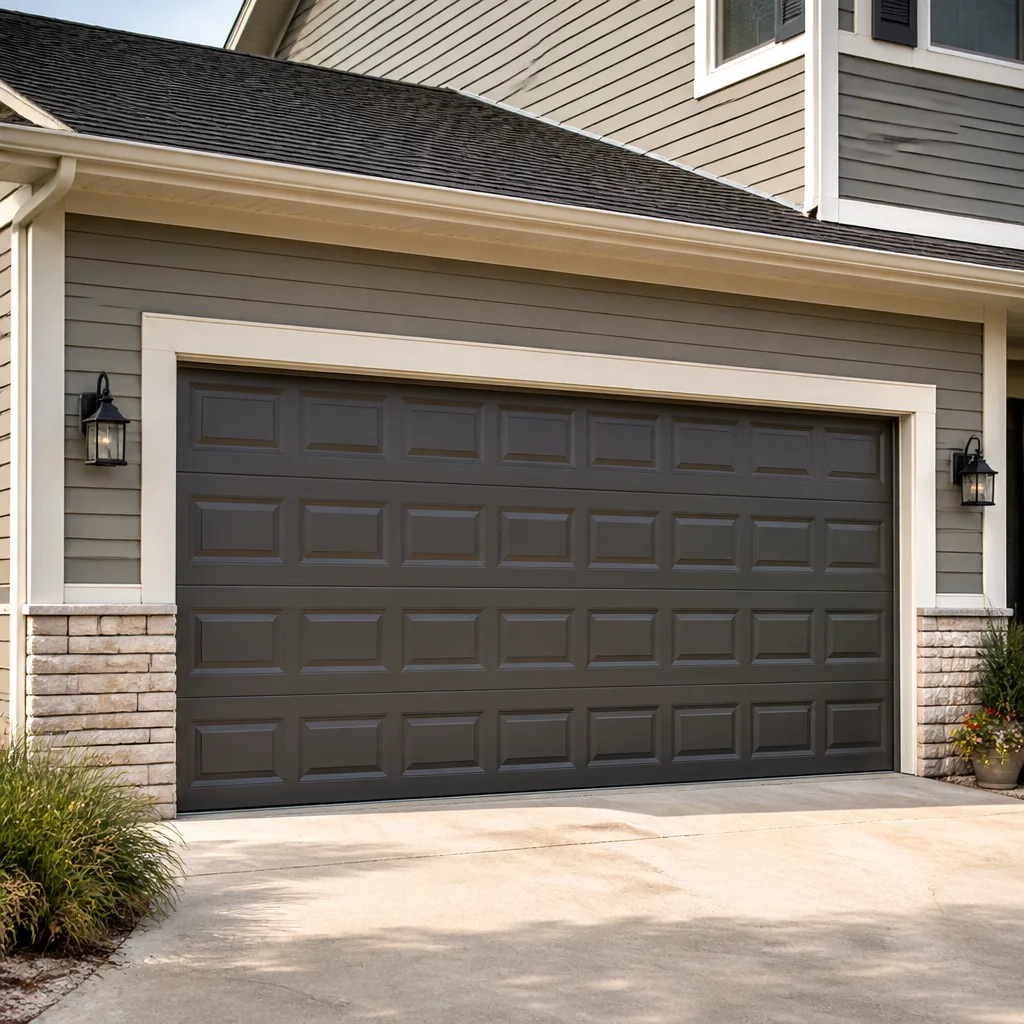 Raised-panel steel
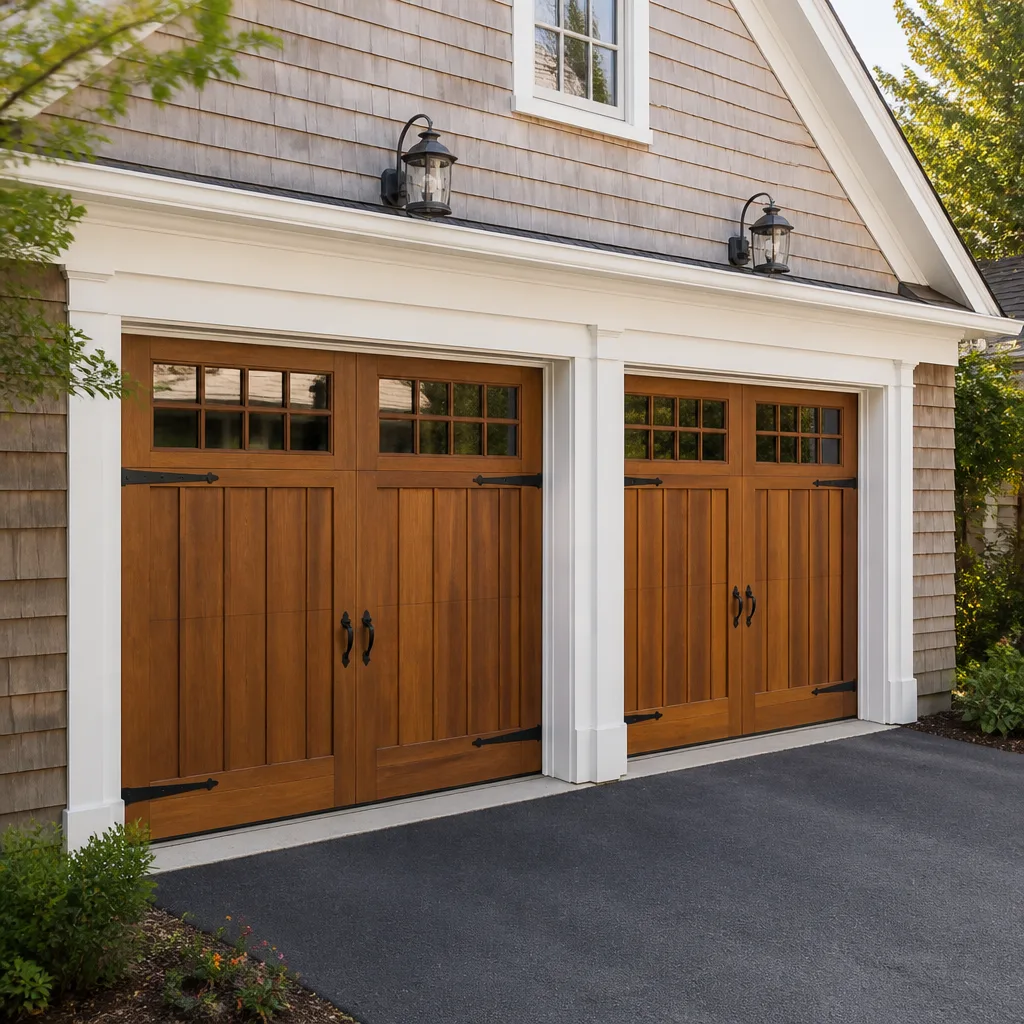 Carriage house
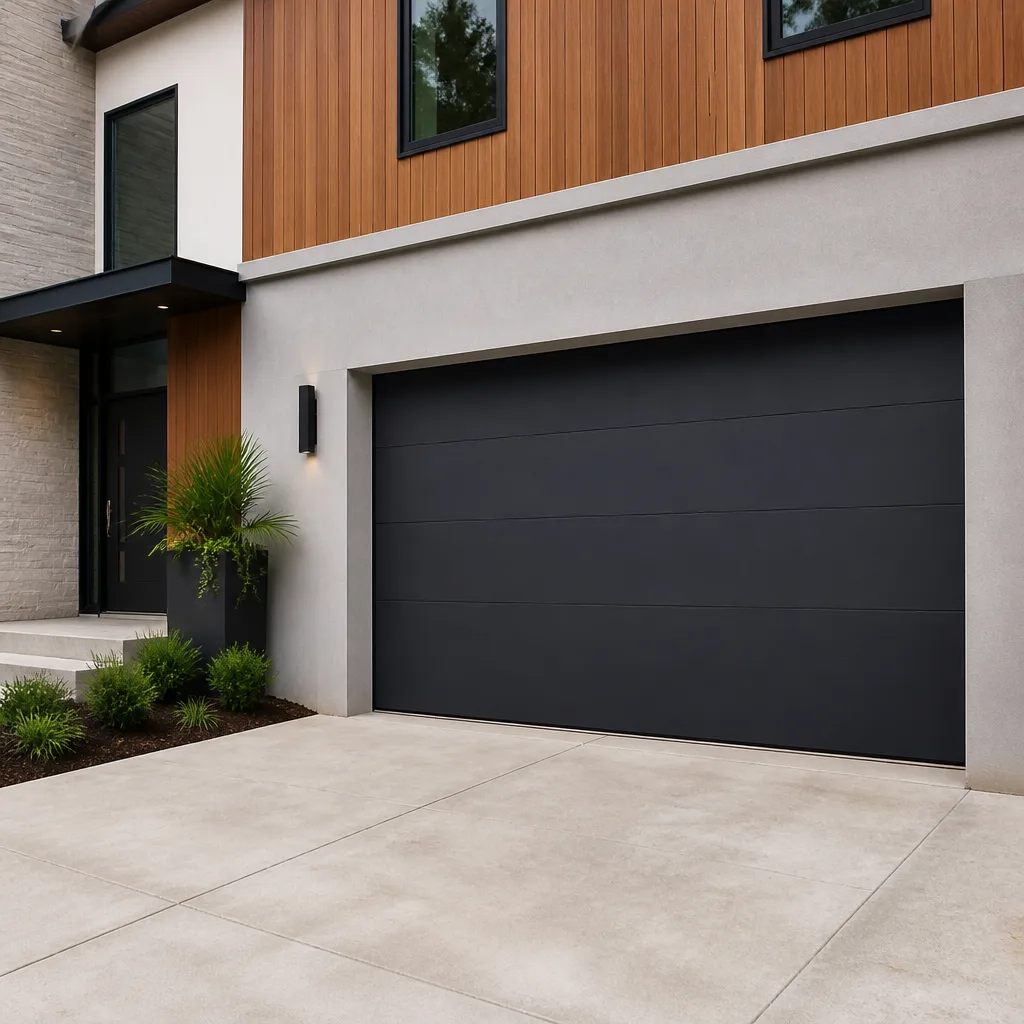 Modern flush
 Full-view glass
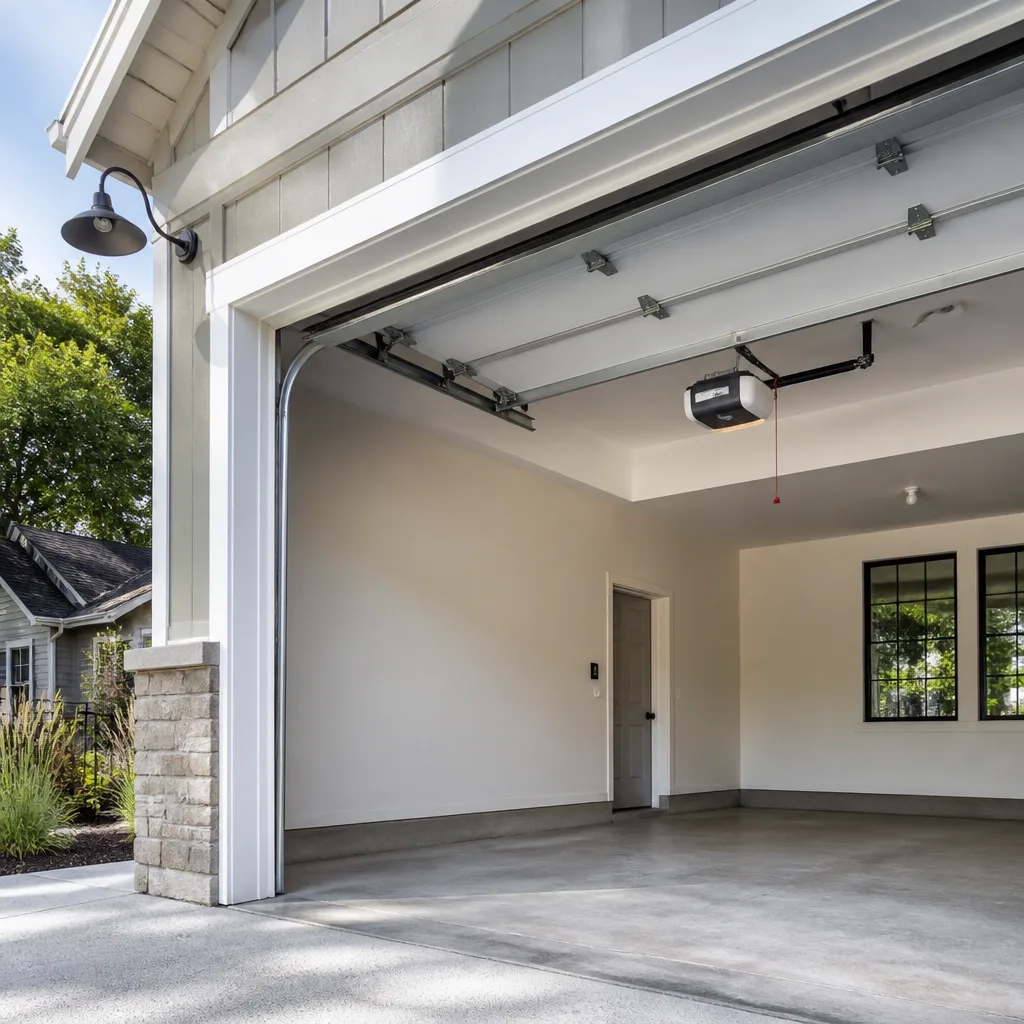 LiftMaster openers
 Chamberlain openers
Full 25-point door and opener safety check with every visit - springs, cables, rollers, tracks, and your LiftMaster or Chamberlain opener included
You get a price before we start. It does not change when the pro arrives.
Get your free estimateGarage Door Warning Signs: An Odenton Homeowner’s Reference Guide
A garage door that hesitates for half a second before it moves isn’t “working fine.” That pause is the opener motor pushing against resistance that wasn’t there a few months ago, and it usually traces back to springs losing tension or rollers starting to bind. The door still opens, so most people let it go. Then three months later the same door is a bigger, more expensive problem. This guide is about catching that first signal, in Odenton and anywhere else, while it’s still cheap to fix. You’ll learn what each sound, hesitation, and uneven movement actually means, what you can check from the floor without tools, and when to stop and call.
Quick Answer
The most important garage door warning signs are a door that hesitates or moves in jerks, one side that sits higher than the other, new or worsening sounds (grinding, popping, squealing), a door that reverses on its own, and springs that have visible gaps in their coils. These early signals appear weeks or months before a failure, and addressing them at that stage is far less involved than waiting. If you spot two or more at once, it’s time for a professional look.
Styles & brands we work with
- Raised-panel steel
- Carriage house
- Modern flush
- Full-view glass
- LiftMaster openers
- Chamberlain openers
Table of Contents
- The Struggling Door vs. the Slow Door
- Why a Half-Second Hesitation Matters
- What Uneven Door Movement Actually Means
- Sound Diagnostics: Grinding, Squeaking, and Popping
- Why a Door That Reverses Unexpectedly Is Usually a Cable or Track Problem
- What You Can Check From the Floor Without Tools
- The Four Stages of Garage Door Failure
- Common Mistakes to Avoid
- When to Call a Professional
The Struggling Door vs. the Slow Door
A slow door and a struggling door look similar from the driver’s seat, and that’s where most confusion starts. A slow door is a door that was always deliberate, moves at a steady pace, and comes down with the same speed every time. A struggling door moves, pauses, moves again, or shudders somewhere in its travel. Same motion on the surface. Only one of them is telling you something is wrong.
So how do you tell the difference? Watch the door for a full open-and-close cycle and ask three questions.
- Does the speed stay the same from top to bottom? A door that speeds up in one section and slows in another is fighting resistance. That unevenness is the signal.
- Does it pause? Any hesitation that lasts longer than half a second, especially just after the motor starts, points to the opener working harder than it should.
- Does it shake? A slight shudder at the end of travel is normal on older doors. A shudder in the middle of travel is not.
A genuinely slow door that has always been slow is just how that model was designed. Many older Wayne Dalton and Craftsman doors were built to move at a modest, steady pace, and a slow steady door isn’t a problem. A door that used to move quickly and now doesn’t is. That change is what homeowners in Odenton should watch for. Mark the speed in your head the next few times you open the door. If it keeps getting slower, the components are telling you something.
One detail worth knowing: a garage door moves on mechanical advantage from its springs, not from the motor alone. The motor mostly provides control and safety. When a door starts acting sluggish, the springs, rollers, or hinges are usually the reason, not the motor. Replacing an opener that isn’t the problem is one of the most common wasted repairs we see.
Why a Half-Second Hesitation Matters
That tiny pause at the start of travel is the single most useful early signal on any residential garage door. Here’s what’s happening mechanically.
The opener motor measures resistance through its travel. When the door’s springs are at full tension and the rollers move freely, the motor barely has to work. When the springs weaken or a roller starts to bind, the door’s weight is being carried less by the springs and more by the motor. The op-ener compensates, then the door starts moving. You see a pause. The motor feels a strain.
Two parts usually cause this:
- Torsion or extension springs losing tension. Springs are rated for a certain number of cycles, and after a few thousand openings on an Odenton door, they lose tension gradually before they break completely. The hesitation is often the first thing you’ll notice, well before any snap.
- Rollers seizing on their shafts. Steel rollers with worn bearings drag. Nylon rollers wear more slowly but can flatten. When rollers drag, the door hesitates and shudders on its way up.
The reason the half-second pause matters is cost. A spring replacement while it’s still intact and a spring replacement after it’s snapped are two different jobs, and the second often comes with damaged cables or bent tracks. Catching the hesitation at stage one is the cheapest moment to act.
If a door in Odenton has developed the hesitation in the same week the weather turned cold, that’s normal. Cold weather stiffens grease and slightly shrinks the metal components. What’s not normal is a hesitation that sticks around after the first warm week. A door that hesitates in mild weather is a door asking for attention. You can see what a spring replacement involves on our garage door spring repair page if you want the full picture before you call.
What Uneven Door Movement Actually Means
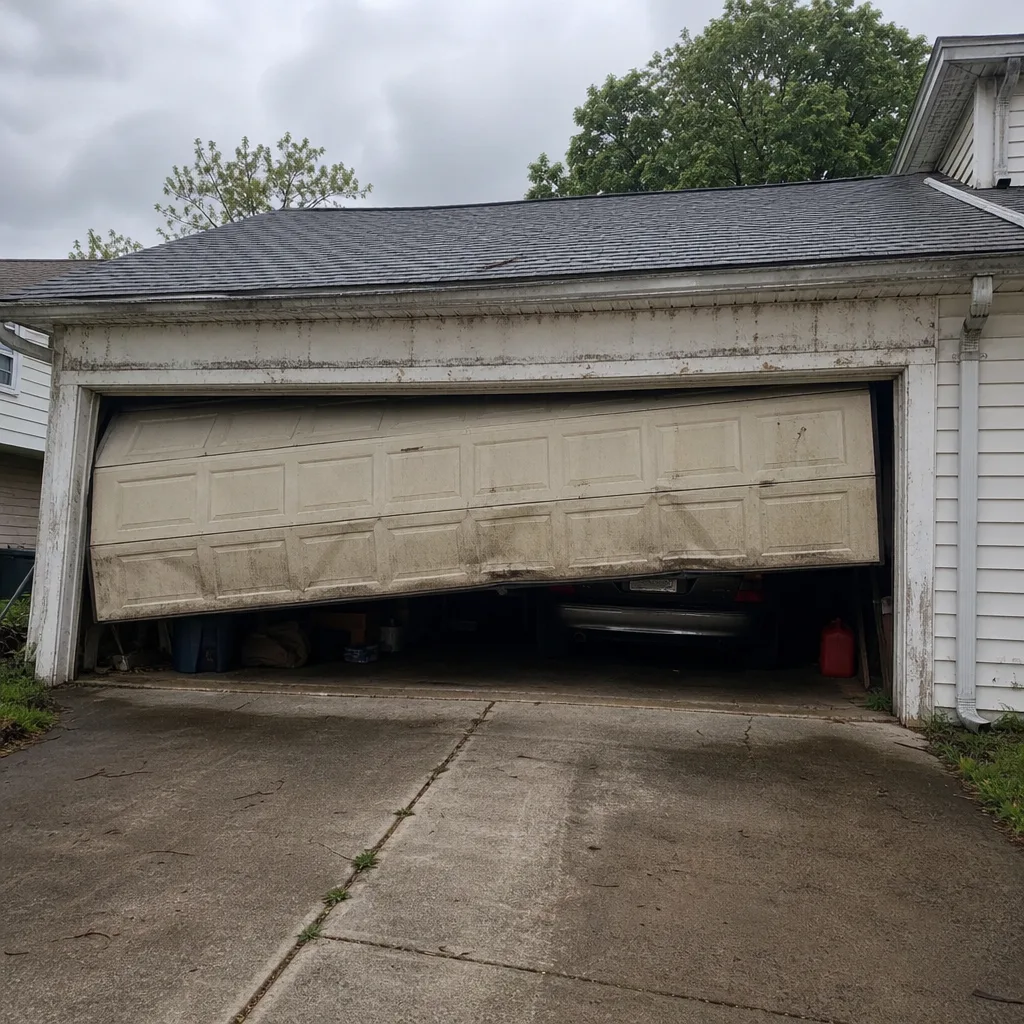
A door that closes with one side high and the other low is the most misread warning sign on a garage door. Homeowners sometimes assume it’s just cosmetic, or that the door will “settle in.” Neither is true. Uneven travel is mechanical, and it tells you exactly which side of the door has the problem.
The door rides on two sets of cables and, on a torsion system, two drums. The spring provides lift on both sides, but through one shaft. If the cables are even and the spring is healthy, both sides stay level. When one side is higher, you’re looking at one of these:
- A stretched or unevenly wound cable on one side. The door moves up more on the side with the shorter effective cable. The opposite side lags.
- A broken spring in a two-spring torsion setup. Many double doors in Odenton use two torsion springs. One can break quietly while the other carries the door. The door still opens, but unevenly.
- A bent or misaligned vertical track on one side. The rollers travel up one rail slightly out of alignment, tilting the door.
- A wall bracket that has pulled loose on one side. Less common, but easy to spot from the floor.
What makes this dangerous is that uneven movement puts twisting force on the door panels and hinges. A door that opens unevenly for months can bend a bottom section or crack a hinge. Then the repair isn’t one part, it’s a panel and a set of hinges.
Beyond the mechanical cost, a door that closes unevenly leaves a visible gap on one side, and gaps are how small animals and water get in. In Odenton, where a lot of homes have garages facing the street, that gap is also easy for anyone walking past to see. Check your door at its closed position every few weeks: the bottom seal should touch the floor evenly across its width. If it doesn’t, the cause is mechanical, and it’s worth a look before winter.
Sound Diagnostics: Grinding, Squeaking, and Popping
Garage door sounds aren’t random. Each one points to a different component. Here’s a working decoder so you can tell what your door is telling you.
Grinding
Grinding is metal-on-metal. It almost always comes from the opener’s drive system (a worn gear or chain on a chain-drive opener, or the trolley on a belt-drive) or from a roller that has completely lost its bearing and is scraping the track. Grinding gets worse fast and often starts as a low hum before it becomes loud. If the grinding is loud at the opener head itself, that’s electrical-mechanical and needs a technician. Garage door opener repair on a grinding drive system is a routine job, but doing nothing burns out the motor.
Squeaking
Squeaking is friction, usually dried-out hinges, rollers, or spring coils. It’s the least serious of the three sounds and often improves with proper lubrication on the hinges and rollers (not the springs, which should be left alone). Persistent squeaking that returns within a week of lubrication points to a worn roller that needs replacing, not more grease.
Popping
Popping is the most serious. A pop, snap, or loud bang during travel usually means a cable has jumped a drum, a hinge is pulling out of the panel, or a spring has just released its tension. If you hear a pop and the door stops moving, stop pressing the button. Call a professional. A door that has lost cable tension can drop without warning.
Clicks and rattles are usually the opener trolley or a loose track bolt. Those are the least alarming of the bunch, but they’re worth tracking down because a loose track is a bent track waiting to happen.
Quick sound reference
- Grinding: opener drive or seized roller.
- Squeaking: dry hinge or roller, sometimes a worn roller.
- Popping or banging: cable, spring, or hinge. Stop and call.
- Clicking: opener trolley or loose track hardware.
- Rattling: loose bolt, bracket, or panel fastener.
Why a Door That Reverses Unexpectedly Is Usually a Cable or Track Problem
Here’s a pattern we see often: a homeowner’s door reverses partway down, and they assume the safety sensors are dirty, so they clean them, and the door still reverses. The sensors were never the problem.
Safety sensors (the small eyes at the base of the tracks) will stop a door if something breaks the beam. That produces a reversal at the bottom of travel, and it usually happens the same way every time. But a door that reverses higher up, at a random point, or with one side still visibly out of line is almost always telling you about a cable or track issue.
The most common mechanical causes of unexpected reversal:
- A loose or slack cable on one side. The door’s balance is off, the opener measures increased resistance, and the safety system interprets that as an obstruction and reverses. The reversal is a symptom, not the problem.
- A roller that has jumped the track. One roller can pop out of a rail, especially after a hard close. The door tilts and trips the opener’s resistance sensor. Never force a door that has jumped its track. It can fall.
- A bent or kinked horizontal track section. The door hits the kink, the opener sees resistance, the reversal fires.
- A misaligned safety sensor from a bump or a shift in the floor bracket. This one actually is the sensors, so it’s still worth a visual check before calling. Look at both sensor eyes and confirm they’re pointing at each other and the LEDs are steady.
If the reversal happens at the same spot every time, suspect the track. If it’s random, suspect a cable. If it’s always right at the floor, look at the sensors. That simple map usually tells you what to do next without a technician guessing. Reversal problems should never be left, because the safety system is the door’s fallback, and a fallback that keeps misfiring is one you want fixed before it stops working at all.
What You Can Check From the Floor Without Tools
You don’t need a ladder or a toolbox to catch the most common garage door warning signs. These are checks you can do from the floor at standing height, and they cover most of the mechanical points that fail.
1. Look at the spring above the door (not the springs, just the shape)
If you have a torsion system, the spring is the horizontal coil above the header. Look for a visible gap in the coil. A gap of an inch or more means the spring is broken, even if the door still opens one last time. Do not touch it. Do not try to measure it. The spring is under high tension and is the most dangerous component on the entire door.
2. Look at the cables on both sides
The cables run vertically from the bottom bracket on each side of the door up to the drum. From the floor you can see whether they’re tight or slack. A cable with a visible kink, a frayed strand, or a slack loop has failed and needs a technician. If a cable looks slack, stop using the door until it’s checked.
3. Look at the rollers
Rollers sit in the tracks and hold the door in. From the floor you can see the rollers near the bottom and middle of the door. A roller that looks tilted, cracked, or has popped out of the track is a visual problem you can spot from a few feet away. On doors in Odenton with steel rollers, look for rust or a flat spot on the roller face.
4. Look at the hinges
Hinges connect the door sections. Look for rust streaming down the panel below a hinge, a hinge pulled slightly out of its panel, or a hinge that’s visibly bent. Hinge failure usually starts as a small separation at the panel edge.
5. Check the bottom seal and the concrete
The rubber seal under the door should touch the floor evenly. If you can see daylight under one side or the door is resting on the concrete at one corner, the door is out of level. Also look at the concrete under the door: an oil stain line or a grooved wear pattern where the seal rests tells you where the door has been pressing hardest.
6. Do the balance test
With the door fully closed and the opener disconnected (most openers have a manual release pull), lift the door by hand about a foot and let go. It should stay roughly where you put it. A door that slides down on its own has weak springs. A door that shoots up on its own has over-tensioned springs or stalled rollers. If the door is heavy to lift, the springs are losing tension. Do this test only if you’re comfortable lifting the door by hand. It takes one person and no tools, but if it feels unsafe, skip it and call.
7. Look at the safety sensors
Both sensor eyes at the base of the tracks should have a steady LED. A blinking LED on either side means the beam is broken or misaligned, and the door will reverse on the way down. Wipe the lenses with a dry cloth and check again.
If you’ve done these checks and something looks off, the next step is a professional look. Our garage door repair page covers the repairs that commonly follow a failed visual check.
The Four Stages of Garage Door Failure
Garage door problems follow a fairly predictable path from a subtle annoyance to an emergency. Knowing which stage your door is in tells you how urgent the fix is.
Stage 1: The early signal
A brief hesitation, a new sound, a slight unevenness on the way down, or a spring that looks normal but the door feels a little heavier. Everything works. Nothing is broken yet. This is the stage to schedule an inspection or repair, because you’re catching the component before it fails.
Stage 2: The reliable symptom
The hesitation is now consistent. The door always makes the grinding sound at the same point. One side is visibly higher than the other. Nothing has failed, but the failure is predictable and getting closer. This is when to stop putting it off.
Stage 3: The intermittent failure
The door sometimes stops partway. It reverses on occasion. It works most of the time, then doesn’t. This is where a lot of homeowners get stuck because the door “worked yesterday.” Intermittent failures are usually the last stage before a full break, and often involve a stretching cable or a spring that has almost released.
Stage 4: The failure
A spring breaks, a cable snaps, or the door comes off track. The door won’t open or won’t close. This is an emergency repair, and the cost climbs because more than one component is usually involved. A door in stage four belongs to our emergency service, not a scheduled appointment. If you’ve hit this point, call and be ready to describe what you’re seeing.
Most homeowners call at stage three or four. The purpose of this guide is to help you act at stage one or two, when the door still technically works but is telling you it’s about to stop.
Common Mistakes to Avoid
- Treating a hesitation as normal. A door that has always been slow is normal. A door that used to move quickly and doesn’t is showing you early spring or roller strain. Treating the hesitation as a quirk costs more than the eventual repair.
- Replacing the opener when the springs are the problem. A door that shudders on the way up looks like an opener issue from the driver’s seat, but it’s usually a spring or roller issue. Replacing a healthy opener doesn’t fix a door that’s out of balance. We see this in Odenton often, and it’s the most common unnecessary repair.
- Greasing the springs. Hinges and rollers benefit from lubrication. Springs don’t, and lubrication on the spring can trap grit against the coils. Worse, getting close to the spring with a can in your hand puts you directly under a high-tension part. Leave the springs alone.
- Force-closing a door that has jumped its track. A door that has popped a roller out of the track can drop without warning. The recovery looks easy. It isn’t. Stop and call.
- Adjusting the safety sensors without checking alignment first. Cleaning the lenses matters, but a sensor that reverses the door after cleaning is usually misaligned, not dirty. Look at the bracket, not the lens.
- Assuming cold weather excuses a persistent problem. Cold weather stiffens grease and can add slight resistance in the winter. But a hesitation that started in the cold and continues into March or April is a mechanical problem that also happens to be weather-sensitive, not a weather problem. Don’t let a full winter of hesitation turn into a spring that breaks in June.
- Waiting for a failure because the door still opens. Every component on a garage door fails on a path from stage one to stage four. The door opening today is not evidence that it will open tomorrow. If you’ve seen a warning sign and ignored it for months, that’s the signal not to keep waiting.
For a full professional check, Garage Door Repair Odenton covers the repair, opener, spring, and installation side of every one of these and can tell you where your door actually is in the stage path. Our technicians have up to 9 years of experience and work on Clopay, Amarr, Wayne Dalton, Craftsman, and the rest of the major residential brands, so the door you already have is the door we’ll be looking at.
When to Call a Professional
Some warning signs are safe to watch. Others need a call immediately.
Call a professional immediately if you see or hear any of the following: a visible gap in a torsion spring, a slack or kinked cable, a door that has jumped its track, a door that has reversed more than once in the same opening, a loud pop or bang from the door, or a door that won’t stay in place when you lift it by hand. These are the signals that the door has crossed into stage three or four, and the risk of a sudden drop is real.
Also call if you have a consistent grinding sound at the opener head, if the door hasn’t had its hardware checked in several years and you’ve started to see uneven movement, or if the balance test showed the door drops on its own when released. None of these are things to sort out at home.
If you’re not sure, describe the sound or movement over the phone and ask. Garage Door Repair Odenton offers free estimates in Odenton. Call (844) 443-4564. We answer 24/7. Fast dispatch from 7am to 7pm, Sunday through Friday. The estimate is free, and the price is quoted and agreed before any work starts.
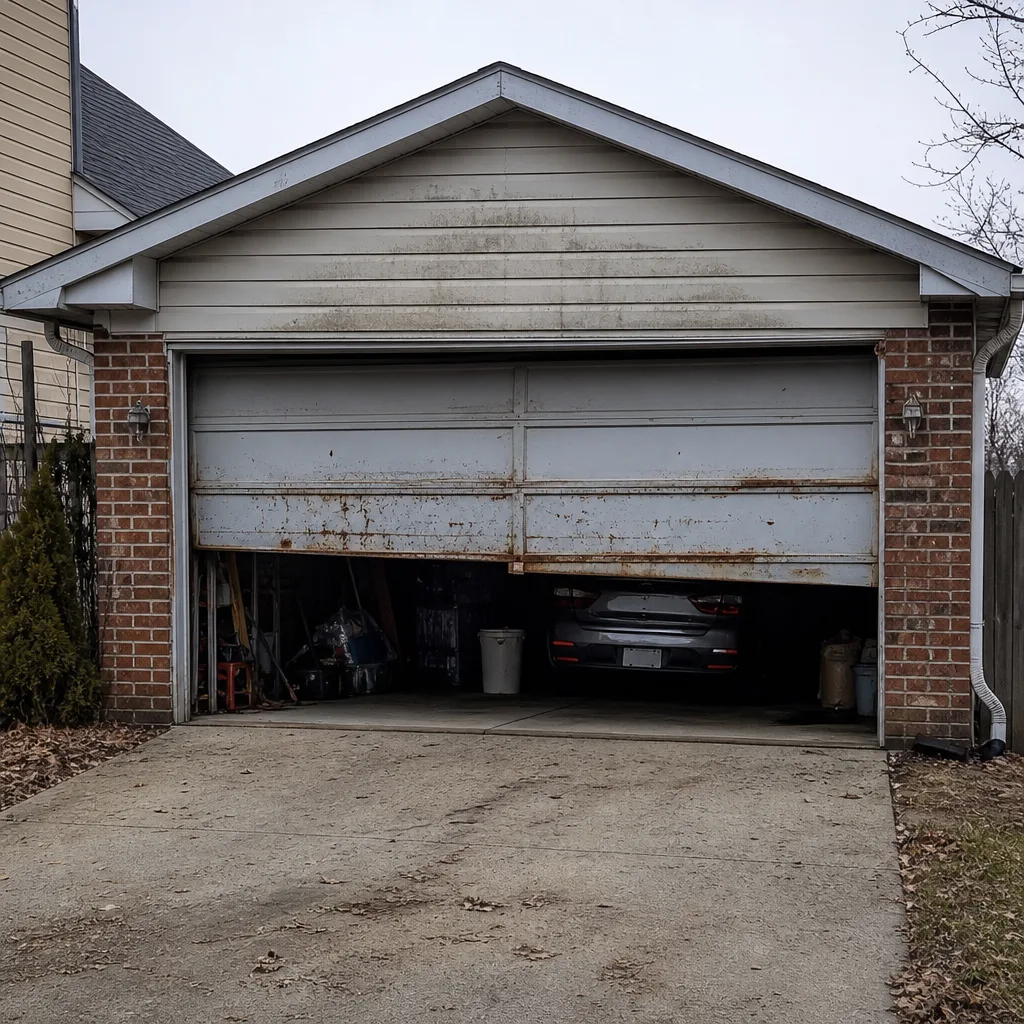
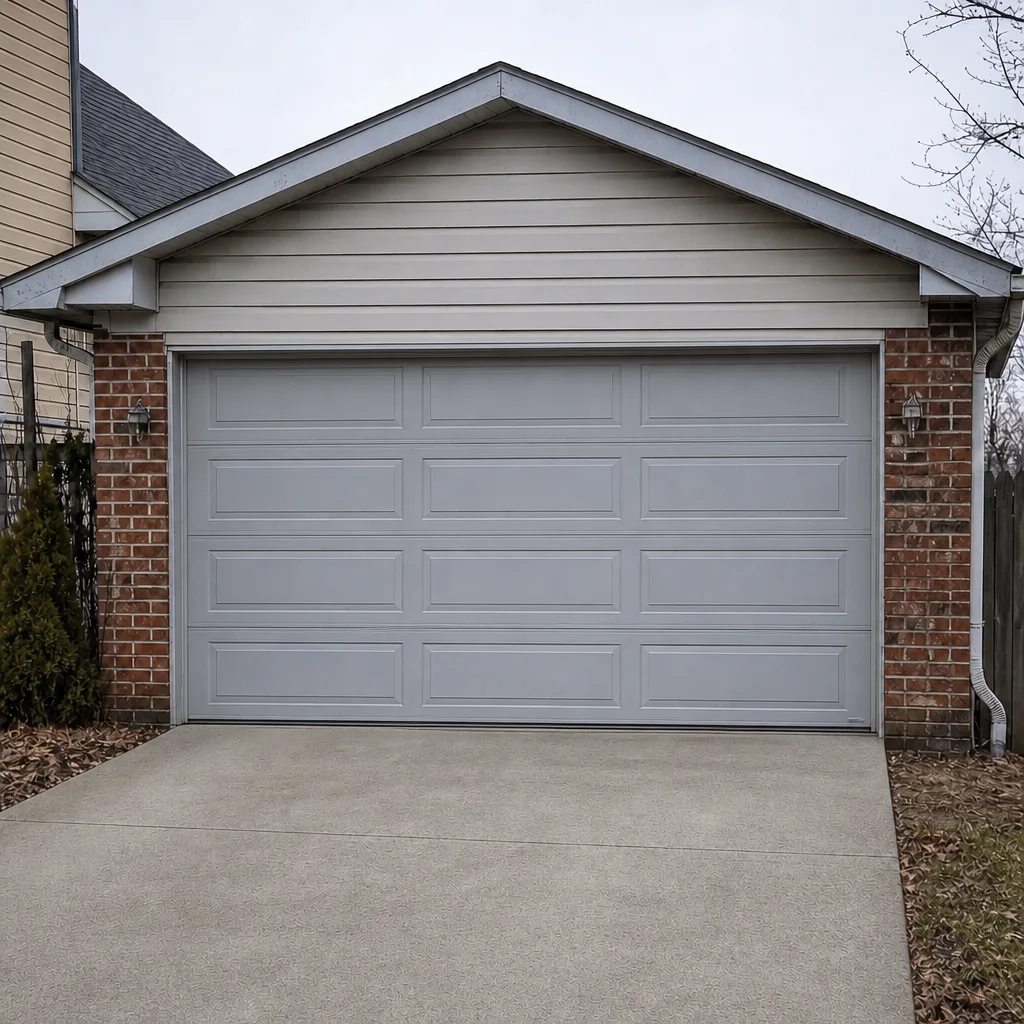
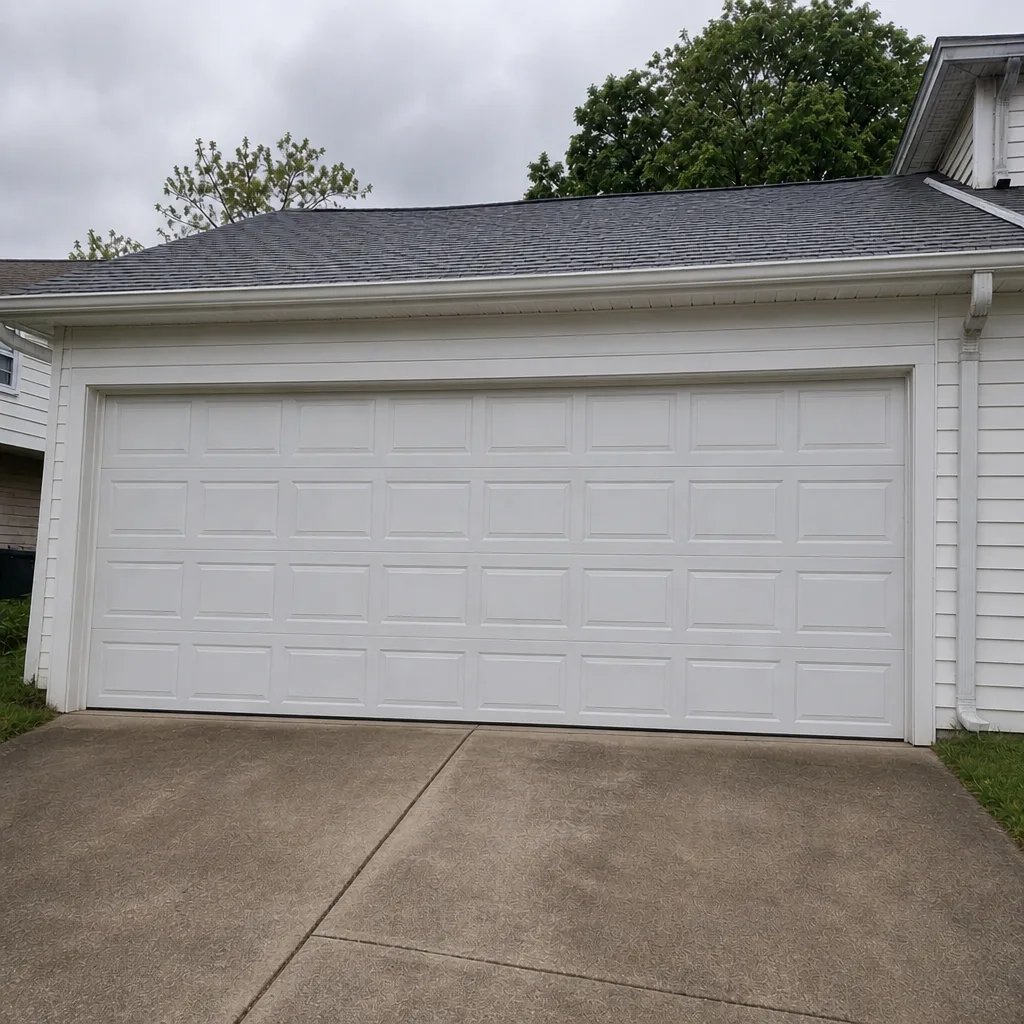
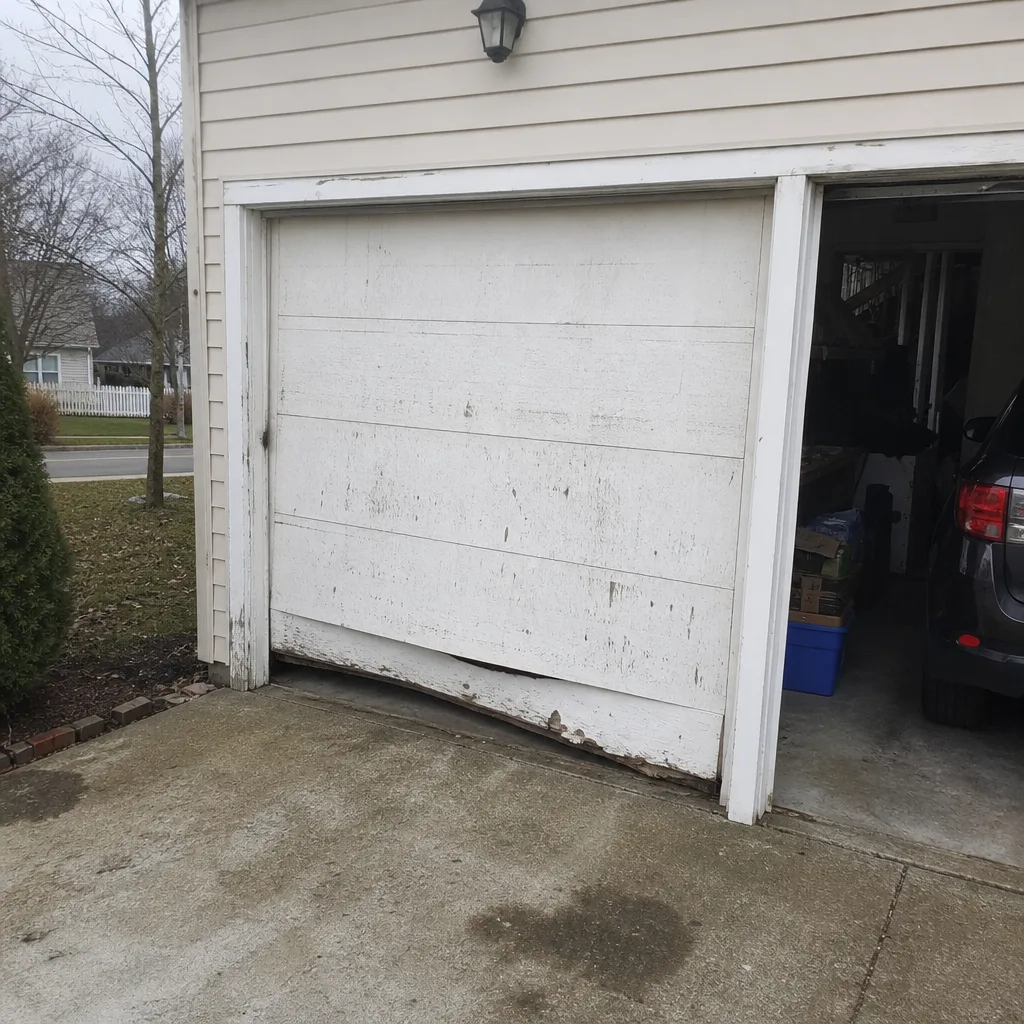
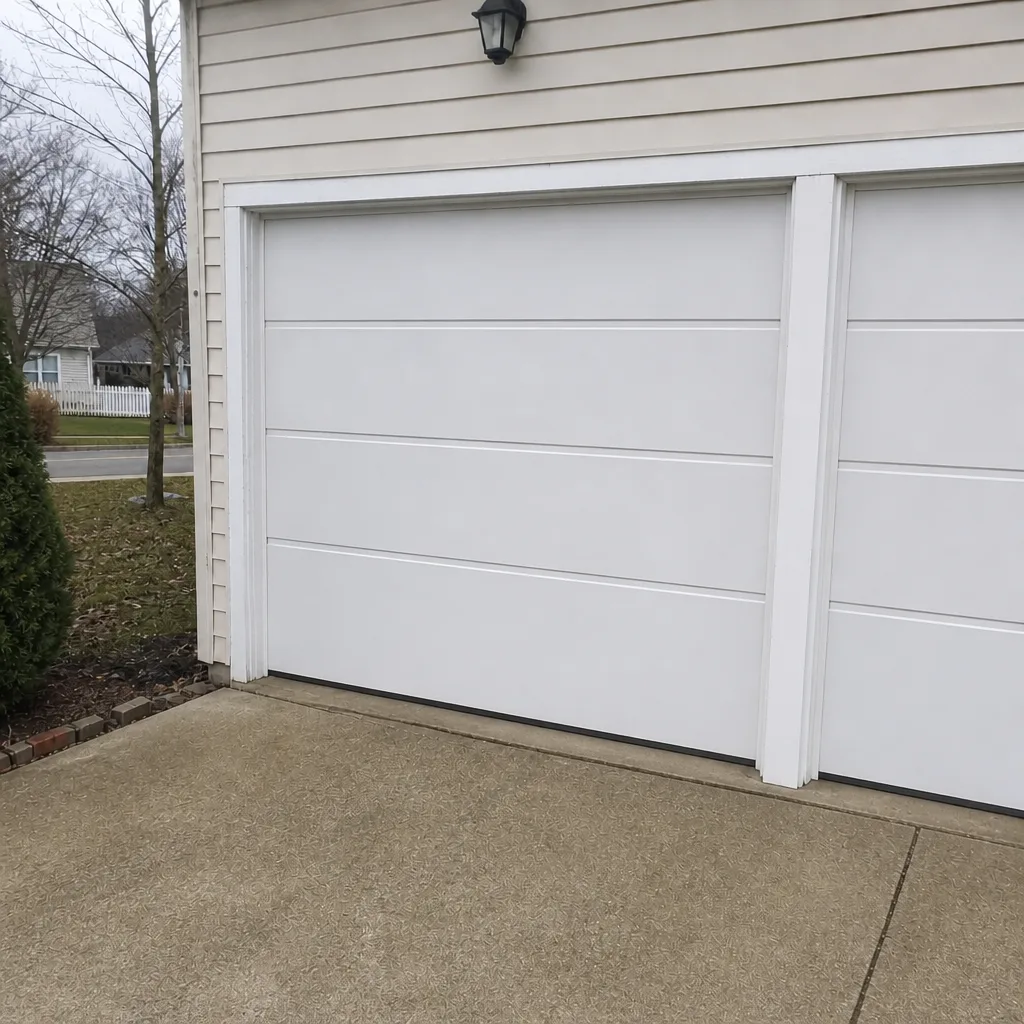
See the difference
 Before
 After
 Before
 After
 Before
 After
Frequently Asked Questions
A brief hesitation at the start of travel is usually the first reliable sign. The opener motor is compensating for reduced spring tension or a dragging roller before the door actually starts to fail. If you notice the hesitation, catch it early: the repair is usually a single component instead of a full spring and cable replacement. Call (844) 443-4564 for an exact quote. Estimates are free.
Most warning signs are repair signs, not replacement signs. A hesitation, a squeak, an uneven side, or a stuck roller is a repair on the door you already have. A door becomes a replacement candidate when the panels are structurally damaged, the hinges have pulled through, or the same failure keeps coming back after repair. Whether a fix or a full replacement makes sense, we’ll give you the straight answer. Call (844) 443-4564 for a free estimate.
No. Springs are the most dangerous part of a garage door, and they’re under high tension even when the door is closed. A spring with a visible gap, slack cable, or a door that hesitates because of spring strain is not a DIY job. Spring repair is a named, explicit service here because it’s one of the highest-risk, most technically demanding repairs in the trade. Call (844) 443-4564 for a professional look. Estimates are free.
Release the door from the manual pull and lift it by hand. If the door is heavy or won’t stay where you put it, the door’s springs or rollers are the problem, not the opener. If the door moves easily by hand but the opener still struggles, the opener is the problem. In our experience in Odenton, the door side is the problem more often than the opener. Call (844) 443-4564 if you want a professional to confirm which side needs the repair.
It depends entirely on which component is failing. A hesitation that traces to a roller or hinge is a small repair, and a hesitation that traces to springs is a larger one. We won’t give you a number over the phone that then turns into a bigger number in your driveway. The estimate is free, it’s written, and the price you agree to before work starts is the price you pay. Call (844) 443-4564 for an exact quote.
Yes. Emergency garage door service is a core part of what we do, not an add-on, and a door that won’t open or won’t close is exactly the situation it’s built for. Fast dispatch from 7am to 7pm, Sunday through Friday. If your call comes outside dispatch hours, we book it into the next opening. Call (844) 443-4564. We answer 24/7.
The Bottom Line
Garage door problems announce themselves long before they fail. A half-second hesitation, a new grinding sound, one side of the door closing higher than the other, a spring with a visible gap, or a door that reverses without an obvious reason are all early signals, and each one maps to a specific component. Catch them at stage one or two, and the repair is small and predictable. Catch them at stage four, and it’s an emergency. If you’ve read this guide and spotted one of these signs on your own door, don’t wait to see how long it takes to fail. Call (844) 443-4564 for a free estimate from Garage Door Repair Odenton. We answer 24/7 and offer fast dispatch from 7am to 7pm, Sunday through Friday. Whether it needs a fix or a full replacement, we’ll give you the straight answer.
Written by the team at Garage Door Repair Odenton.